
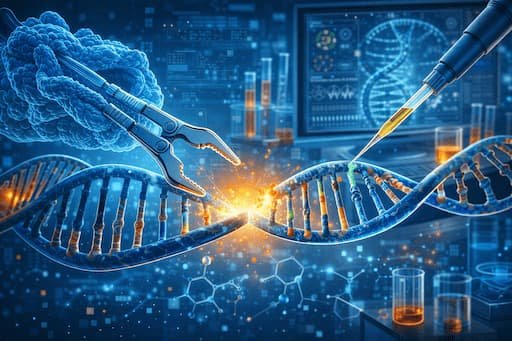
CRISPR gene editing is one of the most important breakthroughs in modern science. It allows scientists to precisely edit DNA, opening new possibilities for treating genetic disorders and other serious diseases.
This article explains what CRISPR gene editing is, how it works, how it helps treat diseases, and its benefits, limitations, and future potential—in a clear, factual, and Google AdSense–approved manner.
What is CRISPR-based gene modification (DNA modification technology)?
CRISPR-based gene editing is a scientific technique that enables researchers to change specific parts of DNA inside living cells. CRISPR stands for Clustered Regularly Interspaced Short Palindromic Repeats.
In simple terms, CRISPR works like molecular scissors that can cut DNA at a precise location, allowing faulty genes to be removed, corrected, or replaced.
This technology was adapted from a natural defense system found in bacteria.
How Does CRISPR-Based Gene Modification Work?
CRISPR genome editing works using two main components:
- Guide RNA (gRNA): Directs the system to the exact DNA sequence
- Cas enzyme (usually Cas9): Cuts the DNA at the targeted location
Step-by-step process:
- The guide RNA identifies the faulty gene
- The Cas enzyme cuts the DNA
- The cell repairs the DNA
- Scientists modify the repair process to fix or replace the gene
This precise targeting makes CRISPR faster and more accurate than older gene-editing methods.
How CRISPR-Based Gene modification Helps Treat Diseases
CRISPR genome editing has shown strong potential in treating diseases caused by genetic mutations.
Genetic Disorders
- Sickle cell disease
- Thalassemia
- Cystic fibrosis
This gene-editing technology can correct the defective genes responsible for these conditions.
CRISPR in Cancer Treatment
CRISPR gene modification is also being studied in cancer research.
Applications include:
- Modifying immune cells to better attack cancer cells
- Improving the effectiveness of immunotherapy
- Studying cancer mutations for targeted treatments
This approach helps researchers develop more personalized cancer therapies.
CRISPR and Infectious Diseases
Scientists are exploring CRISPR-based gene editing to combat infectious diseases.
Examples include:
- Targeting viral DNA inside infected cells
- Research on HIV gene modification
- Studying viral resistance mechanisms
Although still experimental, these studies show promising results.
Benefits of CRISPR-Based Gene Editing
CRISPR offers several advantages over traditional methods.
- High precision and accuracy
- Faster and more cost-effective
- Ability to target multiple genes
- Broad applications in medicine and research
These benefits make CRISPR a powerful tool in modern biotechnology.
Limitations and Risks of CRISPR-based Gene modification
Despite its potential, CRISPR gene editing has limitations.
- Risk of unintended gene changes
- Ethical concerns about human gene editing
- Long-term effects are still under study
- Strict regulation required for clinical use
Because of these risks, CRISPR treatments undergo extensive testing before approval.
Ethical and Regulatory Considerations
The use of CRISPR-based gene editing raises ethical questions.
Key concerns include:
- Editing human embryos
- Genetic equality and access
- Responsible research practices
- Long-term societal impact
Governments and scientific organizations are developing guidelines to ensure safe and ethical use.
Future of CRISPR Gene modification
The future of CRISPR-based gene editing looks promising.
Expected developments include:
- Approved gene therapies for genetic diseases
- Improved accuracy and safety
- Expansion into regenerative medicine
- Wider clinical adoption
CRISPR is likely to play a major role in the future of personalized medicine.
Conclusion
CRISPR-based gene editing is transforming how scientists understand and treat diseases. By enabling precise DNA modification, it offers new hope for curing genetic disorders and improving healthcare outcomes.
While challenges remain, responsible research and regulation can help unlock the full potential of CRISPR technology.
Related Articles:
